So blessed to be able to write this, especially after such a crazy year!Congratulations graduates!
Carried Along
A blog about real life through the lens of Christ
-
As we finish another school year, praying I will focus on God’s definition of success, and not the world’s.
-

In 1996, I taught English in Xingjian, a remote province in China. Bordering Kazakhstan and Mongolia, this obscure province is where Crouching Tiger Hidden Dragon was filmed and is currently well known for the Uighur “reeducation camps” located there. My only longer-term (6 weeks) overseas experience left me with many insights:
- Denominational differences are not as important in spiritually oppressed cultures. The brothers and sisters living there spoke of secret “bathtub” baptisms, ostrasization by family members, “blacklisting” or complete disappearance of new believers, and yes, the death sentence for those found guilty of “proselytizing”. Pentecostal and reformed were not at odds. Believers were truly family. They stuck together despite denominational issues, which might have come between them here in the states.
- Politics is put on the back burner when freedom/democracy don’t exist. At the time, I remember wondering how Western Christians could define themselves minus the terms Republican or Democrat, Pro-Life or Pro-Choice, etc. . . . For the people there, these were not options. They were simply Christians, no other terminology needed. What a concept.
- The word of God is cherished when it is scarce. At this time, when the internet was barely a thought, especially in China, people scoured over 3 pages of the Bible at a time, passing them along to someone else when they finished.
- Lack of freedom of religion, and freedom in general, brought cultures together. In a world where the gospel was scarce and restricted, the Han, the Uighurs, the Kazhaks, and a plethora of other minorities, all had to come together despite their many differences. Was it a struggle? Yes, but they had no choice due to their lack of resources.
With the polarizing political climate controlling the narrative in the West today, Christians could learn a lot from foreign the Christians in oppressive cultures like China. While Western believers are not being martyred, and a surplus of Bibles still exists, Western Christians may do well to put aside minor denominational differences, political tensions, and cultural differences in order to come together as the body of Christ in a time when the Western church is more divided than ever.
When foreign missionaries travel to another culture, whether they be short-term or long-term, they know they will give up many “luxuries”, whether they be physical or otherwise. They will give up physical comforts, familiar food, cultural norms, stereotypes, and be willing to immerse themselves in a culture completely different from their own. They do it because that is the only way for the gospel to go forth. The same concept applies for Western believers in a culture we know very well. In order to achieve the unity of the Spirit in the bond of peace (Ephesians 4:3) and share the gospel with others, we now must “go forth” in our own communities, laying our political and cultural ideas aside, and boy are there a lot of them.
With the prevalence of social media, it is almost as if we are all walking billboards. Unfortunately, our billboards are less about Christ and more about abortion, party politics, immigration, gender identification, critical race theory, COVID, and lockdowns, mine included. Don’t get me wrong, these are important issues, but we can’t treat those on the other side of these issues as our enemies. The enemy never has been flesh and blood. Instead, we fight “against the rulers, against the authorities, against the cosmic powers over this present darkness, against the spiritual forces of evil in the heavenly places” (Ephesians 6:12). The people we see as enemies are actually our brothers and sisters or potential future family members. I assert that the time is now, the time for all of us to adjust our spiritual lenses to that of a foreign missionary in a new culture for the first time. Maybe this refocusing will allow us to see people not as adversaries but as souls: fellow believers or hurting souls that are hungry for the truth we have, that will set them free.
Lord, give us your eyes to see others. May we choose to “know nothing but Christ and him crucified” (1 Corinthians 2:2) in order to live out your gospel in a chaotic world.
-

I pretended that I didn’t see it, the white bag in my son’s backpack that said, “Mom”. Based on years of experience, I knew it was a Mother’s Day “present” they made in school. He would be heartbroken if he thought I saw it before I was supposed to: he loves surprising me; he sure does love his mom. It is the last one, the last school-made gift I will get, this being his last year in elementary school. But as I carefully tucked in back into his bag, I couldn’t help but think of his classmate whose mother passed away last year after a long battle with cancer. What was he feeling as his classmates were crafting these?
As a public school teacher, my joyous holiday thoughts are often interrupted, tainted by the scars of a fallen world. For me, holidays were, well, perfect in many ways. All of them were happy and filled with love. As I have grown older, I have realized just how truly blessed I was to have such a loving, God-fearing family, immediate and extended alike. So as I think of my wonderful mother who taught me to love God, to reach my potential, to serve my family, to pick my battles, to clean a bathroom and much more, I pray for my students (former and present) whose mothers have passed away, are in prison, or who have chosen to abandon them whether it be physically or emotionally. Of course, there are those my age whose relationships with their mothers are complicated or contentious,mother’s who have lost precious children, not to mention countless others who’ve wanted to be mothers and could not either because they are single or cannot conceive or carry a child.
While holidays tend to highlight the pain of the lonely and broken, the gospel gives comfort. Psalm 68 reminds us the God is “A father to the fatherless, a defender of widows, is God in his holy dwelling. God sets the lonely in families. . . . “ (Psalm 86:5-6). James 1 explains, “Religion that is pure and undefiled before God the Father is this; to visit orphans and widows in their affliction, and to keep oneself unstained from the world” (James 1:27). In short, the church is meant to be a family in a world when so many don’t have one.
So, today, as I thank God today for my selfless mother and my beautiful children, I pray I will be grateful for all I have been given. I pray I will cling to Christ as I mother my children in an ever-changing world. Amidst all of this, I pray I will daily speak a motherly word “gracious and seasoned with salt” (Colossi ans 4:6) to anyone who needs it as so many others have done for me.
-

I hate to admit it, but this last year or two, really since #COVID, I’ve had a vision problem. Not the kind a visit to the optometrist and a prescription can fill, but a much deeper problem. My vision isn’t just out of focus, I’m simply looking in the wrong places. Admittedly, blurry vision would indicate an effort to see the truth. Now, truth right now can mean many things, but according to Hebrews 12, we are to “ . . . run with perseverance the race marked out for us, fixing our eye on Jesus, the pioneer and perfecter of our faith”. Why? We must “Consider him who endured such opposition from sinners, so that you will not grow weary and lose heart” (Hebrews 12:2,3).
Yep. That’s definitely what’s happened to me. I am definitely weary. Tired of quarreling and fighting, promises of quick fixes that only seem to perpetuate society’s already ill state. On top of my frustration with the state of, well, everything, I seem to have spiritual amnesia. I somehow believe that I am living in the first time in history without direction, characterized by godlessness, unrest and, yes, insanity. In my frustration, I am conveniently forgetting, blind really, not only God’s sovereignty and love, but the uncertainty of the Abraham’s barrenness, Joseph’s sale and slavery, Daniel’s den and furnace, the Israelites’ captivity again and again; not to mention Christ’s crucifixion during oppressive Roman rule. Basically, I have forgotten my “first love” like the church in Ephesus (Revelation 2) and have no choice but to repent of my wandering eyes.
So, today I am camping in 2 Corinthians 5. Here I am reminded that I am supposed to be groaning, “longing to put on our heavenly dwelling” (5:2) and uncomfortable in this earthly body (2:6). Instead of walking by sight, images of more disheartening news everywhere I look, I am to “walk by faith” (2:7). What does this “blind walking” produce? “ . . . good courage” (2:6). I don’t know about you, but I could definitely use some of that. The secular view produces a lot of things: fear, despair, doubt, but definitely not “good courage”.
A friend posted Psalm 46 today. What a sermon!
“God is our refuge and strength,
An ever present help in trouble.
Therefore we will not fear,
Though the earth give way
And the mountains fall into the heart of the sea . . . “
Lord, forgive me.
Forgive me for forgetting you, your promises, your love, and your sovereignty that has overcome all obstacles past and present and makes “all things work together for good, for those who are called according to his purpose” (Romans 8:28). Forgive me for letting small issues like politics, masks, social distancing, etc. . . . . get in the way of the main thing: loving you and others-yes, even others that I disagree with on the many polarizing issues of the day.
Once again, please
“Create in me a clean heart, O God,
And renew a right spirit within me.
Cast me not away from your presence,
And take not your holy spirit from me.
Restore to me the joy of my salvation . . . “ ( Psalm 51: 10-12).
Lord, fix my eyes on you alone.
-

In the year 2000, I began a six year stint as a teacher in a treatment facility. I had just moved back my home state of Montana, after spending 6 years in Oklahoma and Texas, when my Grandmother died tragically. I missed my family, and I was really questioning how I had spent so many years in the flat lands, so I moved home. That year I began a six year stint as a teacher in a treatment facility. My experience in this setting is and was invaluable. As I taught, worked in the residential lodges, and helped lead worship with the students I taught, I was educated in what it is like to be abandoned, abused, addicted, or tormented by PTSD or mental illness. This experience in understanding the struggles of so many different people has made teaching an art instead of a job for me. The other benefit of working in this setting was the people I worked with. Yes, treatment facilities have a high turnover rate, but there were so many wise, experienced, and Christian people I worked with who taught me so much about working with kids as well as life.
Among these people was the man I consider to be the wisest person I know-no offense to the many wise people God has used in my life. He was a reserved, Christian psychologist who had devoted his life to counseling the most difficult, children and teens in our community. Simply working around him was a constant reminder of God’s character. One day the school was having a myriad of discipline problems-usually around the holidays, full moons, etc. . . . –and as soon as one fire was put out another started. I remember I briefly stopped in to his office to vent. I said something like, “Have you seen what is going on out there? What are we going to do?” He calmly smiled at me and said, “That’s why the Psalm says, ‘I lift my eyes to the hills’ (Psalm 121). We aren’t supposed to look at our surroundings, we are supposed to look up” and calmly went back to work.
There are many times I have recalled this timely reminder, and when COVID hit, this was one of the first verses to pop into my head, not because I had memorized it as a child, but because this man had applied it to real life. Once the cloud of depression I was in wore off from sitting at home and missing my students and co-workers, I really thought we (the country) would have moved on by now, but according to the news I watched this morning, the disruption of life has not only continued but gotten worse. Now we fear the virus, a suffering economy, police brutality, racial unrest, riots and a permanent disruption to life as we know it. And our nation is looking for someone-the right leader (or politician) to make it better, the “right” outcome to the election. How quickly we forget that we already have a savior. It is a waste, a sin, to put our hopes in a new one. Should we vote? Should we get involved in our local communities instead of burying our heads, yes! But we should do these things knowing that because of Christ, “If God is for us, who can be against us?” (Romans 8:31. The victory is already his and will continue to be even if the nation stays in an uproar over one issue or another. Lord, remind us to keep looking up!
-
Faith-Based Parenting: Restrictive or Compassionate?
— Read on box5297.temp.domains/~carrifk7/ -

In 22 years of teaching in public schools, I’ve seen a lot of change. Technological advances, educational trends, parenting styles, behavioral patterns; a lot has changed. One particular change, a growing movement over the years, is that of atheism or agnosticism. In short, many more parents of this generation have decided to raise their children without religion.
My first clue to this societal shift came over ten years ago, when only one student in class of fifteen knew that Christmas was about a birth. In recent years, I have seen it more and more. The reason? From what I have been told by friends of mine who’ve made this decision, this has happened because one parent (or both) felt restricted by their religious upbringing-the term “recovering Lutheran” has come up more than once-or their spouse isn’t religious, and they’ve made a collective decision to leave religion out of their home.
One Google search produced 3 articles titled “I am Unapologetically Raising My Daughter Without Religion”, “I am Raising My Kids Without Religion, and This is Why”, and “I am Raising My Children Without Religion and They Are Just Fine”. Studies show that my assumptions aren’t wrong. A study by the American Enterprise Institute find that 44 percent of young parents take their children to religious services down from more than 60 percent of parents 65 and older (“The decline of religion in American family life”).
I have concluded that many people today, even those who say they are believers, see this approach as progressive and compassionate. They want to spare their children the restriction of their own religious upbringing, some saying they will let their child choose for themselves.
As an English teacher, I read a lot of journal entries and essays written by a wide variety of students. After this exposure to the inner thoughts of teens, I believe more than ever that, while not considered “progressive”, teaching a child the truth of the Bible IS the compassionate parenting approach.
Life in a fallen world (without any hope beyond it) is a lonely, terrifying existence. Not only do kids today have to deal with the common problems kids deal with like succeeding in school, hormones, making choices, and managing busy schedules, they are much more likely to live with a single parent or navigating two households than they were 30 years ago.
Consider the weight this is to bear considering the rhetoric of today. Give me a teen who has been told they are descendant of a monkey, living in a world made by an accidental “bang”, who has been told there is no God or purpose to anything, and I will show you someone who is blown this way and that by the wind. In fact, as far as the general message is concerned, the only reason they exist is that their mother “decided” not to abort them, a choice she had every right not to make. Just functioning under such bleak circumstances has to be terrifying.
On top of this jagged pill to swallow, they are told that the earth (which is all they have) will be destroyed by climate change in any number of years, not to mention their responsibility to solve world hunger, water and air pollution, homelessness, poverty, and social injustice, all while being as “advanced as possible” academically. Shnikies! What a weight to bear! Just writing this is overwhelming me as we “speak”.
How is requiring them to deal with this weight in a context of pure circumstance compassionate? Even secular studies show the benefits of faith in adolescence. A study in The Journal of Political Economy reports, “We find that religiosity has sizeable effects on depression in adolescence, which is understated by OLS estimates that do not deal with selection into religiosity. For example, a one standard deviation increase in religiosity decreases the probability of being depressed by 11 percent” (Fruehworth, Iyer and Zhang). The study goes onto report that faith (or religiosity) act as an emotional buffer for stressors like health concerns, suicide, and divorce and recommends that mental health professionals consider the positive effects of faith for teens prone to depression.
Sure, the message that “All we like sheep have gone astray; we have turned-every one- to his own way” (Isaiah 53:6), “ . . . for all have sinned and fall short of the glory of God” (Romans 3:23), and “None is righteous, no, not one . . . All have turned aside . . . no one does good, not even one” (Romans 3:11-12) may seem harsh to some, but is it harsher than this message of complete hopelessness? Plus, if you could see what I see, kids feel guilt, all of the time. Guilt is a natural state. And what a challenge to deal with their sin, whether they call it that or not, and other insecurities without the knowledge that God “formed you in the womb” and “consecrated” you “before you were born” (Jeremiah 1:5), “I am fearfully and wonderfully made” (Psalm 139:14), the relief that “If we confess our sins, he is faithful and just to forgive us our sins and to cleanse us from all unrighteousness” (1 John 1:9,) and “He does not deal with us according to our sins, nor repay us according to our iniquities. . . as far as the east is from the west, so far does he remove our transgressions from us” (Psalm 103:10-12).
Even in the past month, I have had students write about the lack of supervision in their upbringing, their insecurity of having to choose a career among other life choices, even questioning the existence of God. In light of this and many other life questions, teaching a child that there is a God who loves them, the reality of sin, the hope of a savior, forgiveness for them and others, and the freedom of knowing that there is a plan they can’t mess up, what is more compassionate than that?
Resources:
Fruehwirth, Jane Cooley et al. “Religion and Depression in Adolescence.” The journal of political economy vol. 127,3 (2019): 1178-1209. doi:10.1086/701425.
-
It was 1996, and while the Olympic Games were being held in Atlanta, GA, I was teaching 40+ Chinese teenagers in a Soviet-style concrete building with live electric wires running down the halls. It was a hot, June day, and my eager students, usually so quiet I could hear a pin drop, did something that shocked me; they all burst out laughing, uncontrollably. They weren’t trying to be rude like American teens might, I have seen that in my years of teaching. They revered teachers, feared them, really. They were actually in a state of disbelief that caused them to disrupt, lose themselves. Why? What brought this about? That day we were having a lesson on Easter.
Now, our summer English curriculum for this level of student included culture in order to increase the students’ background knowledge as many language programs do. I had been covering one or two holidays every day, and to me, Easter was just another holiday. After all, it wasn’t the only religious holiday. We also covered Christmas, so what was the big deal? To them, it was different. They were truly amazed, flabbergasted that America, a country they idolized in many ways, celebrated a holiday that involved someone rising from the dead. This, to them, was absurd, asinine really. How could such an educated culture believe in something like this? So in their disbelief, they laughed.
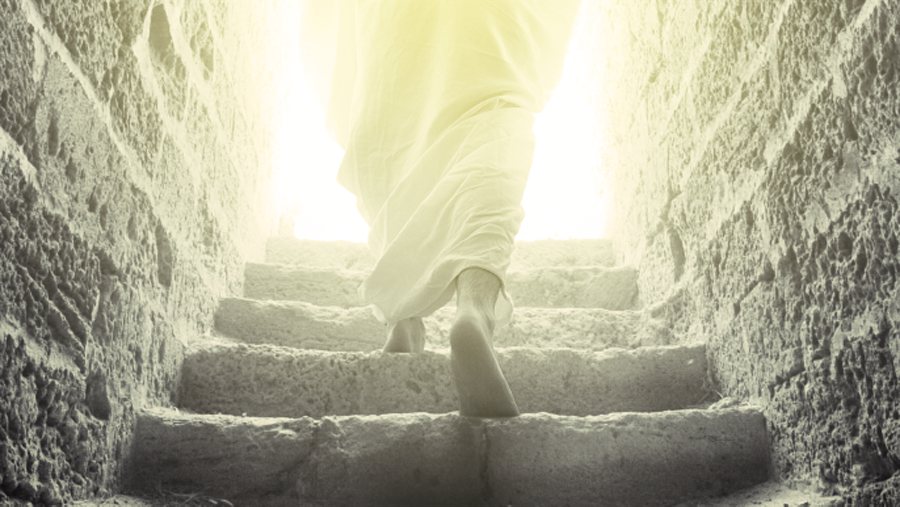
I have reflected on this incident many times since then. That day, I began to understand the shocking truth of Easter. Easter is about resurrection, an occurrence only brought about by a miracle of God. It means not only have our sins been covered, but we, in Christ, have conquered death. We are truly free of the fear of guilt AND of the afterlife. Without Easter, our faith is meaningless, we might as well claim nothing. Everything we know as Christians hinges on this miracle, foolishness to those who don’t believe. So, this weekend may we truly meditate on these words, “He is not here, but has risen. Remember how he told you, while he was still in Galilee, that the Son of Man must be delivered into the hands of sinful men and be crucified and on the third day rise” (Luke 24:6-7). For this, this truth of the resurrection, is not just another holiday, a day for eggs, bunnies and family. It is our lifeline, our ONLY hope.
-

It was 1996, and while the Olympic Games were being held in Atlanta, GA, I was teaching 40+ Chinese teenagers in a Soviet-style concrete building with live electric wires running down the halls. It was a hot, June day, and my eager students, usually so quiet I could hear a pin drop, did something that shocked me; they all burst out laughing, uncontrollably. They weren’t trying to be rude like American teens might, I have seen that in my years of teaching. They revered teachers, feared them, really. They were actually in a state of disbelief that caused them to disrupt, lose themselves. Why? What brought this about? That day we were having a lesson on Easter.
Now, our summer English curriculum for this level of student included culture in order to increase the students’ background knowledge as many language programs do. I had been covering one or two holidays every day, and to me, Easter was just another holiday. After all, it wasn’t the only religious holiday. We also covered Christmas, so what was the big deal? To them, it was different. They were truly amazed, flabbergasted that America, a country they idolized in many ways, celebrated a holiday that involved someone rising from the dead. This, to them, was absurd, asinine really. How could such an educated culture believe in something like this? So in their disbelief, they laughed.
I have reflected on this incident many times since then. That day, I began to understand the shocking truth of Easter. Easter is about resurrection, an occurrence only brought about by a miracle of God. It means not only have our sins been covered, but we, in Christ, have conquered death. We are truly free of the fear of guilt AND of the afterlife. Without Easter, our faith is meaningless, we might as well claim nothing. Everything we know as Christians hinges on this miracle, foolishness to those who don’t believe. So, this weekend may we truly meditate on these words, “He is not here, but has risen. Remember how he told you, while he was still in Galilee, that the Son of Man must be delivered into the hands of sinful men and be crucified and on the third day rise” (Luke 24:6-7). For this, this truth of the resurrection, is not just another holiday, a day for eggs, bunnies and family. It is our lifeline, our ONLY hope.
 Carried Along