• In 22 years of teaching in public schools, I’ve seen a lot of change.  Technological advances, educational trends, parenting styles, behavioral patterns; a lot has changed.  One particular change, a growing movement over the years, is that of atheism or agnosticism.  In short, many more parents of this generation have decided to raise their children without religion. 

    My first clue to this societal shift came over ten years ago, when only one student in class of fifteen knew that Christmas was about a birth.  In recent years, I have seen it more and more. The reason?  From what I have been told by friends of mine who’ve made this decision, this has happened because one parent (or both) felt restricted by their religious upbringing-the term “recovering Lutheran” has come up more than once-or their spouse isn’t religious, and they’ve made a collective decision to leave religion out of their home. 

    One Google search produced 3 articles titled “I am Unapologetically Raising My Daughter Without Religion”, “I am Raising My Kids Without Religion, and This is Why”, and “I am Raising My Children Without Religion and They Are Just Fine”.  Studies show that my assumptions aren’t wrong.  A study by the American Enterprise Institute find that 44 percent of young parents take their children to religious services down from more than 60 percent of parents 65 and older (“The decline of religion in American family life”).

     I have concluded that many people today, even those who say they are believers, see this approach as progressive and compassionate.  They want to spare their children the restriction of their own religious upbringing, some saying they will let their child choose for themselves.

    As an English teacher, I read a lot of journal entries and essays written by a wide variety of students.  After this exposure to the inner thoughts of teens, I believe more than ever that, while not considered “progressive”, teaching a child the truth of the Bible IS the compassionate parenting approach. 

    Life in a fallen world (without any hope beyond it) is a lonely, terrifying existence.  Not only do kids today have to deal with the common problems kids deal with like succeeding in school, hormones, making choices, and managing busy schedules, they are much more likely to live with a single parent or navigating two households than they were 30 years ago. 

    Consider the weight this is to bear considering the rhetoric of today.  Give me a teen who has been told they are descendant of a monkey, living in a world made by an accidental “bang”, who has been told there is no God or purpose to anything, and I will show you someone who is blown this way and that by the wind. In fact, as far as the general message is concerned, the only reason they exist is that their mother “decided” not to abort them, a choice she had every right not to make.  Just functioning under such bleak circumstances has to be terrifying. 

    On top of this jagged pill to swallow, they are told that the earth (which is all they have) will be destroyed by climate change in any number of years, not to mention their responsibility to solve world hunger, water and air pollution, homelessness, poverty, and social injustice, all while being as “advanced as possible” academically.  Shnikies!  What a weight to bear!  Just writing this is overwhelming me as we “speak”.

    How is requiring them to deal with this weight in a context of pure circumstance compassionate? Even secular studies show the benefits of faith in adolescence.  A study in The Journal of Political Economy reports, “We find that religiosity has sizeable effects on depression in adolescence, which is understated by OLS estimates that do not deal with selection into religiosity. For example, a one standard deviation increase in religiosity decreases the probability of being depressed by 11 percent” (Fruehworth, Iyer and Zhang).  The study goes onto report that faith (or religiosity)  act as an emotional buffer for stressors like health concerns, suicide, and divorce and recommends that mental health professionals consider the positive effects of faith for teens prone to depression.

    Sure, the message that “All we like sheep have gone astray; we have turned-every one- to his own way” (Isaiah 53:6), “ . . . for all have sinned and fall short of the glory of God” (Romans 3:23), and “None is righteous, no, not one . . . All have turned aside . . . no one does good, not even one” (Romans 3:11-12) may seem harsh to some, but is it harsher than this message of complete hopelessness?  Plus, if you could see what I see, kids feel guilt, all of the time.  Guilt is a natural state.  And what a challenge to deal with their sin, whether they call it that or not, and other insecurities without the knowledge that God “formed you in the womb” and “consecrated” you “before you were born” (Jeremiah 1:5), “I am fearfully and wonderfully made” (Psalm 139:14),  the relief that “If we confess our sins, he is faithful and just to forgive us  our sins and to cleanse us from all unrighteousness” (1 John 1:9,) and “He does not deal with us according to our sins, nor repay us according to our iniquities. . . as far as the east is from the west, so far does he remove our transgressions from us” (Psalm 103:10-12). 

    Even in the past month, I have had students write about the lack of supervision in their upbringing, their insecurity of having to choose a career among other life choices, even questioning the existence of God.  In light of this and many other life questions, teaching a child that there is a God who loves them, the reality of sin, the hope of a savior, forgiveness for them and others, and the freedom of knowing that there is a plan they can’t mess up, what is more compassionate than that?

    Resources:

    Fruehwirth, Jane Cooley et al. “Religion and Depression in Adolescence.” The journal of political economy vol. 127,3 (2019): 1178-1209. doi:10.1086/701425.
  • It was 1996, and while the Olympic Games were being held in Atlanta, GA, I was teaching 40+ Chinese teenagers in a Soviet-style concrete building with live electric wires running down the halls. It was a hot, June day, and my eager students, usually so quiet I could hear a pin drop, did something that shocked me; they all burst out laughing, uncontrollably. They weren’t trying to be rude like American teens might, I have seen that in my years of teaching. They revered teachers, feared them, really. They were actually in a state of disbelief that caused them to disrupt, lose themselves. Why? What brought this about? That day we were having a lesson on Easter.

    Now, our summer English curriculum for this level of student included culture in order to increase the students’ background knowledge as many language programs do. I had been covering one or two holidays every day, and to me, Easter was just another holiday. After all, it wasn’t the only religious holiday. We also covered Christmas, so what was the big deal? To them, it was different. They were truly amazed, flabbergasted that America, a country they idolized in many ways, celebrated a holiday that involved someone rising from the dead. This, to them, was absurd, asinine really. How could such an educated culture believe in something like this? So in their disbelief, they laughed.

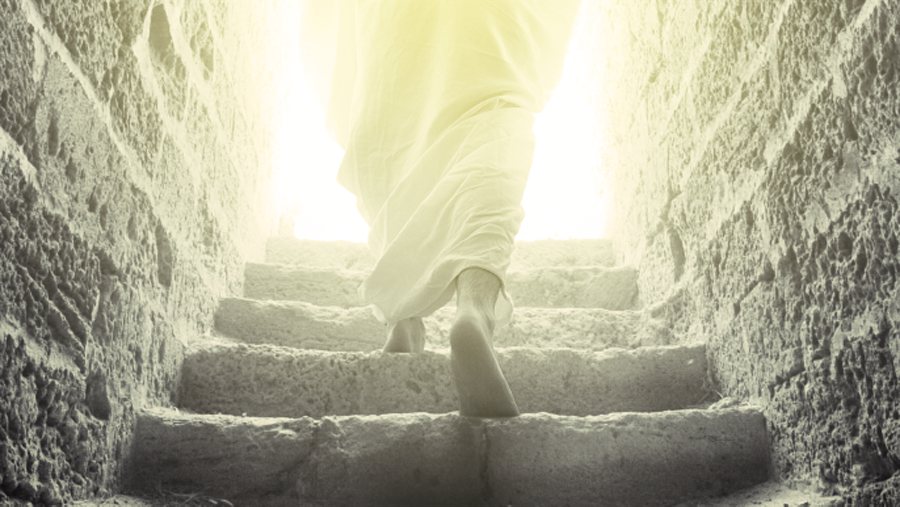
    I have reflected on this incident many times since then. That day, I began to understand the shocking truth of Easter. Easter is about resurrection, an occurrence only brought about by a miracle of God. It means not only have our sins been covered, but we, in Christ, have conquered death. We are truly free of the fear of guilt AND of the afterlife. Without Easter, our faith is meaningless, we might as well claim nothing. Everything we know as Christians hinges on this miracle, foolishness to those who don’t believe. So, this weekend may we truly meditate on these words, “He is not here, but has risen. Remember how he told you, while he was still in Galilee,  that the Son of Man must be delivered into the hands of sinful men and be crucified and on the third day rise” (Luke 24:6-7). For this, this truth of the resurrection, is not just another holiday, a day for eggs, bunnies and family. It is our lifeline, our ONLY hope.

  • It was 1996, and while the Olympic Games were being held in Atlanta, GA, I was teaching 40+ Chinese teenagers in a Soviet-style concrete building with live electric wires running down the halls. It was a hot, June day, and my eager students, usually so quiet I could hear a pin drop, did something that shocked me; they all burst out laughing, uncontrollably. They weren’t trying to be rude like American teens might, I have seen that in my years of teaching. They revered teachers, feared them, really. They were actually in a state of disbelief that caused them to disrupt, lose themselves. Why? What brought this about? That day we were having a lesson on Easter.

    Now, our summer English curriculum for this level of student included culture in order to increase the students’ background knowledge as many language programs do. I had been covering one or two holidays every day, and to me, Easter was just another holiday. After all, it wasn’t the only religious holiday. We also covered Christmas, so what was the big deal? To them, it was different. They were truly amazed, flabbergasted that America, a country they idolized in many ways, celebrated a holiday that involved someone rising from the dead. This, to them, was absurd, asinine really. How could such an educated culture believe in something like this? So in their disbelief, they laughed.

    I have reflected on this incident many times since then. That day, I began to understand the shocking truth of Easter. Easter is about resurrection, an occurrence only brought about by a miracle of God. It means not only have our sins been covered, but we, in Christ, have conquered death. We are truly free of the fear of guilt AND of the afterlife. Without Easter, our faith is meaningless, we might as well claim nothing. Everything we know as Christians hinges on this miracle, foolishness to those who don’t believe. So, this weekend may we truly meditate on these words, “He is not here, but has risen. Remember how he told you, while he was still in Galilee, that the Son of Man must be delivered into the hands of sinful men and be crucified and on the third day rise” (Luke 24:6-7). For this, this truth of the resurrection, is not just another holiday, a day for eggs, bunnies and family. It is our lifeline, our ONLY hope.

  • This is my newest post of my new website which can be found at http://box5297.temp.domains/~carrifk7/?p=619. I hope you enjoy it!

  • If you’re like me, I get a “verse of the day” on my phone.  Today’s verse was Jeremiah 17:7-8 which states, “Blessed is the man who trusts in the LORD.  He is like a tree planted by water that sends out its roots by the stream, and does not fear when heat comes, for its leaves remain green, and is not anxious in the year of drought, for it does not cease to bear fruit”.  What a timely word.  The words “. . . does not fear”, “ . . . is not anxious”, and “does not cease to bear fruit” are so contrary to much of the what the country, and the world for that matter, are choosing.  Unfortunately, I, for one, have spent a lot of time this year mourning losses, even despairing in reaction to the unpleasant changes around me.  Sadly, many adults have not only despaired but quit going to church, quit attending Bible studies, and, let’s face it, quit interacting with others at all, especially those in need.  And now the question remains, as states open up for “meeting together”, and “get back to normal”, will I begin to socialize again or become perpetually reclusive?

    While COVID has helped us develop good habits like hand washing and more frequent sanitizing of surfaces, it has also has helped us develop unhealthy habits of fear, indifference, and, let’s face it, hatred. Many of us now have the excuse to “not” do what we used to do.  Now, while some of those activities may be okay to cut out, those that include failing to “meeting together” with brothers and sisters in Christ, “not (withholding) good. . . . when it is in (our) power to act” (Proverbs 3:27), practicing hospitality (Romans 12:13), and looking “to the interests of others” (Philippians 2:4) are not. 

    One gift of many for me this year, and every year for that matter, has been interacting with teens every day.  I know, many people would not consider this a gift, but I do.  Kids, yes, even teens, are energetic, passionate, funny, opinionated, and ready for whatever’s next.  They do not know how to “take a year off” like many have suggested and even followed through with.  They have friends to see, grades to earn, games to play, races to run, and lives to live.  “Sit one out” is not in their vocabulary.

    Having spent this perilous year around such a positive crowd has definitely helped me keep my attitude in check. Whenever I wanted to throw the towel in, their insatiable optimism inspired me to go on, to do what I was called to do. Even when things looked different, even masked up and six feet apart, I kept going. After all, they didn’t quit.

    Maybe this is what Jesus meant when he said in the gospels, “Truly, I say to you, unless you are converted and become like children, you will not enter the kingdom of heaven” (Matthew 18:2) and “. . . the kingdom of God belongs to such as these” (Matthew 19: 14).

    Until an adult tells them to stop, kids will still hug a friend who is sad, play a game, laugh, and do all they are allowed to do.  Fear? Sure, some of them are fearful, but not fearful enough to give up this thing we called life.  They are the ones I have looked to, focusing on the task at hand and not the looming, paralyzing fear.  After all, isn’t it this attitude that drove Abraham to (almost) sacrifice his only son, Moses to overcome his greatest fear, Joseph to face his hostile brothers, Daniel to defy the king, Joshua to conquer Jericho, and Jesus to willingly die on a cross?

    So, as we enter into a new phase, whatever that may be for each of us, may we look to the children around us, ready to live at the smallest opportunity.  Let them show us how to use of “shield of faith”, and feet “fitted with the gospel of peace” (Ephesians 6: 15-16), as we venture out and begin to “live” as He intended despite the risks around us.

  • When I consider my own temperament, I often question why God chooses to use seemingly difficult dispositions to accomplish his plan. Well, we may never have the answer to that question this side of heaven, but there is good news! The fathers and mothers of the faith were human too—personality flaws and all.

    https://twitter.com/pcacdm/status/1368925166986739715?s=21

  • Recently, my devotions have had me reading in 1 John.  The truth?  This book has always been a tough one for me. Tough verses such as, “No one who abides in him keeps on sinning; no one who keeps on sinning has either seen him or known him.” (3:6), or how about “If anyone says, ’I love God’, and hates his brother, he is a liar” (3:20), and “Do not love the world or the things in the world. If anyone loves the world, the love of the Father is not in him” (2:15).  Ouch.  I’ll admit it.  I prefer other verses that don’t remind me of my glaring depravity.  1 John does that again and again.

    The verses I focused on recently were in chapter 3, regarding love. Love is a nice topic, right?  It seems like, while there are many things we can disagree on, love seems pretty safe.  Not in 1 John.  Just like the other chapters, 1 John calls us out on loving God’s way, not ours.  We like to love who we want when we want.  As Matthew 5 explains, “. . . love your enemies and pray for those who persecute you . . . If you love those who love you, what reward will you get? Are not even the tax collectors doing that. . . . Be perfect, therefore, as your heavenly father is perfect” (5:44-48).  Whew!  Can’t we just talk about the love I’m comfortable with-namely, loving when it’s convenient?  Why is gospel love so demanding?

    If I’m honest, love is a challenge for me right now.  Yes, I am starting to feel less shocked, less angry, than I did during the time of intense lockdown, unrest, and political divide, but the residue of those intense emotions-many I’m not proud of-is still there, smudging my attitude and actions.  Most of the time it’s too hard to think about, so I just keep my feelings bottled up-anger at those who disagree with me on how COVID is being handled, the protests, the election, and politics in general.  I am still pouting about the activities I can’t participate in, the trips I can’t take, the unidentifiable weight I feel. 

    In short, I have a lot of repenting to do.  And while many of the sins I need to repent of I’m not even aware of.  What I do know, is that I feel that tightening in my chest, that knot in my stomach, when people say things I don’t like, and until I confess my sins of hate-yes, I said it, hate-for those who I feel have restricted or are restricting the life I want to live, I cannot love, not Biblically. 

    So, as society continues to open up-a recovery of sorts-my prayer is that God will soften my heart, let me see all of the sin I am still holding onto from this past year, help me repent-however feebly- and lead me to love, not those that are easy to love, but those who I feel are opposing me and everything I believe in.  Only then, can I begin to show the kind of sacrificial love Christ showed, the love he intends. 

  • Winter was late in my neck of the woods this year.  Well into January, we could walk, bike, hike, even golf-unprecedented, especially for January.  And then it hit-winter.  Not the gradual kind with temps in the 30s and snow to start, but a 40 degree drop in temps and almost a foot snow, all of a sudden.  This week we ventured out into temps as low as -10 to go to school and participate in as much “normalcy” as we could while praying our cars would start and not leave us stranded.  

    On top of this shock, I had a bad week.  I made such mistakes as leaving my car light on all night, requiring my husband to jump my car in -15 temps.  Needless to say, the limitations of the severe weather and my serious personal weaknesses left me feeling, well, like a true failure.  I want to be in control of my activities, my actions, etc. . . . And this week. . . I haven’t been.

    Just as the weather comes in seasons-even if they are wonky at times-life comes in seasons too.  This week I could barely function.  My plans were limited by circumstance and my own personal shortcomings. And God foresaw all of it.  What’s funny?  I’m certain his carefully orchestrated purposes were carried out while I stumbled through each day. 

    As Ecclesiastes 3 states, “For everything there is a season, and a time for every matter under heaven:  a time to be born, and a time to die; a time to plant, and a time to pluck up what is planted; a time to kill and a time to heal. . . “, and time to be revisit the reality of my weakness.  For while I know such truths as “. . . apart from me you can do nothing . . . “ (John 15:4-5), “Many are the plans in the mind of a man, but it is the purpose of the Lord that will stand” (Proverbs 19:21), and “ . . . you do not know what tomorrow will bring. What is your life?  For you are a mist that appears and for a little time and then vanishes” (James 4:14), I still feel that I am only valuable when I am “productive”-accomplishing what I deem necessary for that day, week, or month.  When I am not productive, like this week, I feel uncertain, revealing my true inclination to rely on myself more than God more often than not.

    One of my favorite books I came across in my 20’s was a devotional-now out of print- that used Amy Carmichael’s writings as a source.  One of her illustrations talked of the “winter” seasons of our lives, the “bare” seasons when it felt like we were bearing nothing, especially not fruit.  A woman who spent 20 years bed-ridden surely had the right to talk of such seasons-she knew that feeling better than most. 

    While I cannot find this book- I have lent my copies and cannot by another- I recently came across a quote of hers from If stating, “Trust me to poor My love through thee, as minute succeeds minute.  And if thou shouldst be conscious of anything hindering that flow, do not hurt My love by going away from Me in discouragement for nothing can hurt so much as that . . . Trust me to turn My hand upon thee and thoroughly to remove the boulder that has choked thy riverbed, and take away all the sand that has silted up the channel.  I will not leave thee until I have done that which I have spoken to thee of.  I will perfect that which concerneth thee” (If). 

    Wow.  What a way to illustrate Philippians 1:6.  I am so grateful that God’s plans are not thwarted by “boulders”-even if I put them there in my own weakness. 

    Lord, help me faithfully accept the seasons you bring, good and bad, knowing that even in the seemingly fruitless frozen tundra, you, not me, are responsible for bringing “it (the good work you are doing in me) to completion at the day Jesus Christ” (Philippians 1:6).

  • I just happened to overhear the news, the way I often learn of happenings in our school.  The decision is final, there will be no #prom this year, again.  Now, we have been fortunate.  We are in school, and will have some sort of graduation, but this senior class, just like last year’s, won’t be dressing up, buying corsages, worrying about who to go with, something most of us took for granted.  It’s funny how much we are creatures of habit-more than we realize.  That’s one gift COVID has given us, one of a few, the opportunity to actually follow the admonishment given in James 4 warning us, “Come now, you who say, ‘Today or tomorrow we will go into such and such a town and spend a year there and trade and make a profit’-yet you do not know what tomorrow will bring” (James 4:13-14). 

    We’ve heard this verse before-our life is but a mist, “Dust in the Wind” as Kansas would put it.  We know we are not supposed to assume any plans but are instead instructed to say, “If the Lord wills, we will live and do this or that” (James 4: 15).  Now, our grandparents who grew up during the depression, they knew how to comply with this strange command.  They were not guaranteed a job, food, travel, the survival of an infant, recovery from illness, and while we are not truly guaranteed any of these things, many of us have taken them for granted, until now.

    In the past year, our circumstances have changed.  We have feared disease like we never thought we would in this lifetime, and some of us have suffered illness and lost loved ones.  We have cancelled vacations, and hesitated to reschedule them not knowing how open or hospitable our desired destination will be.  We have actually cancelled worship services, VBS, and Sunday School, activities which have operated rain or shine for years.  The list could go on and on. 

    And as inconvenient as it is to be in the dark about the outlook of the next year, God is as happy as a father whose teenage son lost his cell phone, or better yet all technology, wrecked his car, and is forced to interact with the family again, maybe even play a game of chess.   We now must do what we should have been doing all along, tread carefully and prayerfully day by day, and walk humbly with our God (Micah 6:8) instead of plowing headlong into every expected activity, without even consulting the Lord about his agenda for us in these unprecedented times. 

    The Proverb which states, “The heart of a man plans his way, but the lord establishes his steps” (16:9), has always been true-but now, thanks to COVID, it has come to life before our eyes-whether we appreciate it or not.

    So, instead of mourning the security of our predictable lives, may we “always be of good courage” knowing that we who don’t know the future must trust in the one who holds it in his hands.  For how often have we truly had our eyes opened to our true position of “groaning” mentioned in 2 Corinthians 5, our longing for our Heavenly home, “ . . . a house not made with hands”? What a gift to know that God has “prepared us for this very thing” knowing that it is good to mourn the separation we have from Christ until we finally reach our “heavenly dwelling”. For only when we realize our true desperation, often dulled by the business of life, can we “walk by faith, not by sight” as we long for our only true home.