It’s finals week in my world. And as I’m frantically writing tests and grading final assignments, my students are, well, stressed. Of course, any motivated teen is stressed about doing well on the final and maintaining their desired GPA, but this year is different. What are they stressed about? Well, I guess the first question is, what are any of us feeling during these trying times? Whether we admit it or not, we are all asking the same questions:
What is this next year going to be like?
Should I plan anything?
Is it a good idea to travel right now?
When can I resume regular social activities?
Or better yet, will things return to normal, ever?
After an especially grueling week in my College Writing class, it dawned on me exactly how much extra stress my students are under. The level of uncertainty they are dealing with during their senior year is unprecedented, barring generations who graduated during the Vietnam Conflict or related situations, of course. Graduation, prom, sports events, summer jobs, college-none of it is for certain. And the general state of the country? That hasn’t looked too promising for a while now.
I’ll admit. I am the number one advocate of as much normalcy as possible. I want schools open, businesses running, people working, regular worship services, all of it. And I have operated that way as much as possible in the recent months, but as much as I march on like a reliable steam engine, the truth is, I’m tired, really tired. I don’t say it, but I’m under duress. It is as if I have been in one long winter, cold, dark, oppressive. A winter that won’t seem to end.
I’m done pretending. I want to maintain what normal life I can, but I need to admit how I feel. And I know I’m not the only one. The stress of this year is taking its toll. So, what do we do now? Now when circumstances might change, but we’re not exactly sure when or if or how. Fortunately, God is in the business of rest. Not the kind of rest after the source of stress is already eliminated, but the rest that happens in the middle of the storm, when the waves are still crashing in, disrupting plans and lives, rest for the truly weary.
I’m always comforted by the Psalms. They remind me that I’m not the only one who feels overwhelmed, weak, helpless. During an inquiry into Psalms about rest I found the following:
“It is in vain that you rise up early and go late to rest, eating the bread of anxious toil; for he (God) gives his beloved sleep” (Psalm 127:2),
And,
“In peace I will both lie down and sleep; for you alone, O Lord, make me dwell in safety” (Psalm 4:8),
Or,
“Be still before the Lord and wait patiently for him; fret not yourself over the one who prospers in his way . . .” (Psalm 37:7)
And of course,
“Be still and know that I am God. I will be exalted among the nations, I will be exalted in the earth!” (Psalm 46:1).
There is rest in God. There is rest for our weary souls. Right now. Even in such unpredictable times. It is time. Time for me to admit my exhaustion, and seek the kind of rest only God can give. What better source to turn to than the God that gives peace “not as the world gives” (John 14:27), but the kind “which surpasses all understanding” (Philippians 4:7).
Please take my fear of physical disease and the myriad of circumstances I cannot control
Grant me instead, a reverent fear of you alone
The one whose love cannot be hindered “Though the mountains be shaken and the hills removed. . . ” (Isaiah 54:10)
Crippling Despair
In your mercy, grant me the wisdom to “lift my eyes to the hills” (Psalm 21:1) instead of focusing on the upheaval, around me, ideological and political alike
For despite the many dismal images of hopelessness this year has produced
You continue to promise, “I know the plans I have for you declared the Lord, plans for welfare and not for evil, to give you a future and a hope” (Jeremiah 29:1)
Worldly Enmity
Lord, please remind me that my enemies are not made of “flesh and blood”
Even as I am daily bombarded with contrasting points of view
May I resolve to “know nothing . . . except Jesus Christ and him crucified” (1 Corinthians 2:2)
For even when the world around me seems shaky, you have declared, “For my thoughts are not your thoughts, neither are your ways my ways . . . (my word) will not return to me empty, but will accomplish what I desire . . . “ (Isaiah 55: 9,11)
Lord, grant me the wisdom to “throw off everything that hinders” and “run with perseverance the race” (Hebrews 12: 1) marked out for me as I hope in you alone, the Lord of 2020, 2021, and all eternity
I don’t know about you, but we had an extraordinarily quiet Christmas this year. For the past several years, Christmas vacation was filled with cousins playing, skiing, endless noise and activity. For us, and many others, this year was different. Not only do we have less family around but less activities in general. Now, quiet isn’t all bad. I’ll admit, it is nice to breathe and actually have a vacation, but as I looked into my son’s longing eyes, not sure what to do with all of this free time after Christmas, I revisited the true grief I sometimes feel when I recall my own childhood Christmases.
Now, I realize that many do not have good Christmas memories. While many have harsh remembrances of discord, divorce, or alcohol abuse, my childhood Christmases were truly magical: our basement packed with cousins on the floor and the fold out couch, my one cousin who roused us all at 3 am every year to say that Santa had come, filling two rows at the movie theater on Christmas night, late night games of spades, marathon shopping for sales, and not a moment of discord, even with 9 cousins in one house. Those times were really little pieces of heaven in a fallen world.
But as we all know, nothing lasts forever this side of eternity. Grandparents pass away, cousins grow up and have families of their own, people move, and sadly, families grow apart, and apparently, pandemics can rise up unexpectedly. I have always been excessively nostalgic, never wanting anything to change. But no matter how I want things to stay the same, they don’t. Why else would Moses tell us, “ He (God) will never leave you or forsake you . . “ (Deuteronomy 31:8) or Malachi report, “I the Lord do not change: therefore you, O children of Jacob, are not consumed” (Malachi 3:6), or Paul promise “Jesus Christ is the same yesterday and today and forever” (Hebrews 13:8)? Apart from God, nothing stays the same.
Especially in 2020, we are painfully aware of the constant state of change. As a person who tends toward depression, change is painful, a burden I wish I didn’t have to bear. Recently, however, I heard an illustration that changed my perspective, and I finally saw the redemptive message in the darkness of nostalgia. My friend’s daughter was called home from her friend’s house. She came home bummed out saying, “I wish I could stay and play forever.” My friend told her, “We were created for good things to last forever, but because of sin, we can only have small glimpses of heaven. One day we can enjoy eternal joy in heaven forever.” Wow. After spending a few minutes wondering if I had ever imparted even close to that kind of wisdom to my own children, I slowly began to realize how God can use my nostalgia to draw me to him instead of pull me into despair.
Maybe this feeling of wanting great heaven-like moments to stay the same are a picture of what God intended for us in the first place. Maybe we are meant to long for the Eden-like relationships characterized by complete vulnerability with God and others. Maybe when those brief moments of closeness and harmony are disrupted or come to an end, God is reminding us that this world is not our home, that we are to mourn the absence of that intimacy and expectantly long for our true home in eternity with him.
I don’t know about you, but I am ready to end my love-hate relationship with nostalgia, treating it as this heavy load I am doomed to bear. For so many of us, our lives are so comfortable, so easy and predictable, we often forget to mourn this broken world and long for the reconciliation only heaven holds. So, this year, when we aren’t quite so comfortable, when our lives are much less predictable, may we joyfully cling to Jesus’ words, “Let not your hearts be troubled. Believe in God, believe also in me. In my father’s house are many rooms. If that were not so, would I have told you that I go to prepare a place for you? And if I go and prepare a place for you, I will come again and take you to myself, that where I am you may be also” (John 14: 1-3).
Lord, forgive me for wallowing when my excessive nostalgia wants circumstances to stay the same. Please use my nostalgic thoughts to point me to your life-giving promises of reconciliation and eternity with you.
It really is hard to believe. Who could have believed the barrage of change we have seen since last Christmas? Sure, we knew it might be a bit crazy with an unknown virus and a U.S. election. But a pandemic? Countries and states shutdown? Protests, violence and destruction? It’s still a bit much to take in. Not to mention, it’s not over. Much of the change we have experienced is here to say, for the foreseeable future anyway. Many of us still can’t to work, go to school, worship, or travel normally. Our lives have been greatly disrupted. The world is truly upside down.
While a lot of us are still reeling from the shock of the torrent of change, some of us are starting to ask the question: What now? What does God want from me now? So, what does God want from us in a world that upside down? Great news! He has an upside down gospel that fits a time exactly like this.
Now, if you’re like me, you may be saying, “Sure. I know that God is hasn’t left me, but what am I supposed to do? I am scared. My children, my relatives, and our acquaintances are scared. We don’t know how to function or move on. We’re not even sure when or if this insecurity of the unknown will ever end. And even if a vaccine is found, and the political climate quiets, how do we even begin to re-enter this ‘post-COVID’ world?”
It really is so easy for us to forget that the savior who has been with us in our mostly predictable lives in the recent past did not live a “mostly comfortable” life or come to save a “mostly comfortable” people. Distraught, empty, and at our wits end? That’s right down his alley.
Just a glimpse of Jesus’ life reminds us of the difficult time Jesus lived in. Who was he? An average member of an oppressed minority group from a nothing town who was placed in a feeding trough at birth. In fact, Philip was asked in John 1:46, “Can anything good come out of Nazareth?” Not only that, but he and his family were refugees, running from a tyrannical ruler who wanted him dead.
And whom did God choose to announce his birth to first? The rich and powerful? The religious leaders in the temple? Not at all. He announced it to Shepherds. Uneducated and of humble position, they heard the news first.
What about his welcome? Well, it might have been a little more prestigious if his announcer hadn’t been his unruly hippy of a cousin wearing camel’s hair and eating locusts and wild honey (Matthew 3:1:1-17).
And the list goes on. He broke Sabbath rules, created a cabinet of lowly, uneducated laborers, and associated with religiously unclean characters. Corrupt tax collectors, promiscuous women, cripples, children, and those who had nothing to give; that is who he brought his kingdom to.
As for the religiously upright? He never fit in with them.
Because of his humble status, the upright among his own people were not only disappointed in him, but scorned him as well. How did they react to him? Try these:
“ . . . and when they saw Him, they implored him to leave their region” (Matthew 8:34).
“ . . . Is not this the carpenter, the son of Mary, and brother of James and Joses and Judas and Simon? Are not His sisters here with us?” And they took offense at him” (Mark 6:3).
“And all the people in the synagogue were filled with rage as they heard these things” (Luke 4:28).
“ . . . and they got up and drove him out of the city, and led Him to the brow of the hill on which their city had been built, in order to throw Him down the cliff” (Luke 4:29).
“But first he must suffer many things and be rejected by this generation” (Luke 17:25).
“He came to his own, and those who were His own did not receive him” (John 1:11).
“And when they came to the place that is called The Skull, there they crucified him, and the criminals, one on his right and one on his left” (Luke 23:33).
In upside down times like these, fraught with fear, uncertainty, and even despair, may we truly see Jesus. Not the Jesus we have been fitting into our comfortable, predictable lives, but the savior whose life was always upside down, always the opposite of what those who had it together wanted. He is the King of Kings, but few in his time saw him that way. If anyone knows about uncertain times, it is Jesus. So, as 2020 comes to an end and the uncertainty rages on, may we rejoice in him, the one who triumphed in uncertain times and reminded doubters then and now, “I have said these things to you, that in me you have peace. In the world you WILL have tribulation. But take courage; I have overcome the world” (John 16:33).
We hear it every year. That song reminding us of those in third world countries, Africa, to be specific, who don’t have any of the material reminders of Christmas that we have. Recorded by singer Bono, with a focus on a particular famine in Ethiopia in 1984 and recorded in 2004 and 2014 for other causes, it has lines like “Where the only water flowing/Is the bitter sting of tears” and “And there won’t be snow in Africa this Christmas time/The greatest gift they’ll get this year is life”. While highly criticized for several reasons, the song does propose a good question: In the midst of the busy consumerism of Christmas, do we think of others, those who are concerned about surviving instead of a Christmas tree and what’s under it?
I really hadn’t paid much attention to the song, not until a few years ago. I can still see remember the road I was driving up when it came on, just another Christmas song on the radio, when it dawned on me: actually, the question is misdirected, by 180 degrees to be exact. The question isn’t do those in need, who are truly hungry, know it’s Christmas, but do we, as Americans even “see” the true meaning of Christmas anymore? In places like Ethiopia, whose population is reported to be 62% Christian (in 2007), there is much higher chance of people recognizing the true meaning of Christmas than in America, where the same percentage, 65%, claimed to be Christian in 2019. Why?
Well, the answer is obvious, staring at us through store windows filled with the most desired new video game console, speaking to us out of our TV offering more Christmas movies, and consumer ads, than we could possibly watch, all of which purposely avoid anything to do with the actual meaning of Christmas. Now, I know very little about Christmas in Africa, but in my estimation, Africa’s Christmas, like many other third world countries, is much smaller, largely observed by true believers, focused on the birth of Christ. In America, the holiday is out of control, an overwhelming holiday that’s 95% secular. Here, we are encouraged to “believe” in some ethereal idea based on, well, I’m not exactly sure what it’s based on, a fictional man in a red suit and a feeling of goodwill and happiness we are supposed conjure up from deep within ourselves, I guess. And if we don’t celebrate this “Christless” holiday, we are Scrooges, killjoys who are denying this obscure spirit we desperately need to experience the baseless “joy” of the season.
About 10 years ago, my English students were completing a holiday analogy practice. Out of 15 students, only one knew that Christmas was based on a birth. In a world where Christianity is considered antiquated and stuffy, an astonishing number of Americans, especially the younger generation, don’t really know what the true meaning of Christmas is. At the same time, an astronomical number of 5th graders in my son’s class still believe in Santa, ardently. Even he is surprised at the vigilance with which this myth is carried out by his friends’ parents.
So, do those in need know it’s Christmas? Many of them, yes, probably more than in America. I can guarantee that while they don’t have snow, large displays, or pumpkin lattes, the believers in many countries with less comforts are celebrating birth of Christ with much less distraction than we are. Sure, we know the true meaning. We attend Christmas Eve services, along with the countless soul-numbing Christmas songs, movies and activities we partake in, determined to encourage joyous celebration without mentioning the baby born, the only true “Prince of Peace” (Isaiah 9:6-7).
2020 has been challenging year to say the least. And many are feeling less festive this year than usual. Travel is risky, festivities are scaled down or cancelled altogether. Many are only attending church online. Christmas just doesn’t feel the same. And maybe that’s okay. Maybe in mourning our usual holiday activities, we will actually remember the true reason to celebrate. Maybe we will have time to truly see the baby in the manger, scorned by the world for our sake. And maybe, just maybe, we will appreciate the message of the angels who proclaimed, “Fear not, for behold I bring you good news of great joy that will be for all people. For unto you is born this day in the city of David a Savior, who is Christ the Lord” (Luke 2:10-11).
This is the gift of 2020, a year filled with fear and unrest. What gift? The gift of a need for him, the time to focus on the true meaning of Christmas. So, may we be more like those brothers and sisters who don’t have the abundance we enjoy. May we have their appreciation for the one, the only one, who can truly bring peace to our hearts and the Earth as a whole.
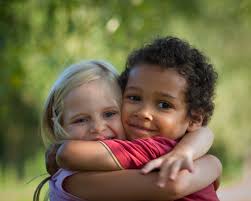
I didn’t mean to; it was a reflex. I just hadn’t seen her in a while, and before I knew it, I hugged her-in a grocery store! I felt so bad. What if I am sick and don’t know it? What if she somehow gets COVID from that one thoughtless act? A few months ago, I saw two ladies greet each other in Walmart. They instinctively went in for a hug and stopped short, looking around to see if anyone was watching. They didn’t hug. We are not supposed to. Hugging has gone from a kind greeting, a comforting act to a hateful one. Just like that.
Now, I’ll admit, a germophobe is something I’ve never been, thus the reason I’ve chosen to spend my days in a place with 1500 teens, but I am concerned. Yes, I am concerned about the growing COVID numbers around me, but I am also concerned that we are naively forbidding proximity, touch, and yes, hugs in an already tragically lonely world. What will the last six months of reduced physical touch do to us, the already lonely, and our children? And how do we recover from this lack of touch when we are being told that this reduced affection must continue for at least the next year, resulting in a permanent change in our habits? The sad truth? We are already changed.
In August, a study of the mental health effects of COVID and its related restrictions done in June which reported, “Elevated levels of adverse mental health conditions, substance use, and suicidal ideation were reported by adults in the United States in June 2020. The prevalence of symptoms of anxiety disorder was approximately three times those reported in the second quarter of 2019 (25.5% versus 8.1%), and prevalence of depressive disorder was approximately four times that reported in the second quarter of 2019 (24.3% versus 6.5%) . . . and approximately one in 10 reported that they started or increased substance use because of COVID-19. Suicidal ideation was also elevated; approximately twice as many respondents reported serious consideration of suicide in the previous 30 days than did adults in the United States in 2018 . . .”(https://www.cdc.gov/mmwr/volumes/69/wr/mm6932a1.htm).
With society in such a state with no end in sight, touch such as hugs may be more important than ever. The following are some of the benefits of touch reported in this 2018 article by Medical News Today, https://www.medicalnewstoday.com/articles/323143:
Touch soothes children during times of distress. A study from Sweden showed that hugging and patting children has a “soothing effect”. These acts of physical affection “allow the child in distress to regain a sense of security and reassurance” and may make counseling efforts more effective.
Touch improves general health. Several areas of benefit are mentioned here such as lower blood pressure and heart rates as well as less severe reactions to infections and protection against respiratory illnesses. Wow! Maybe instead of reducing touch to protect from COVID, we should increase it.
Touch reduces pain. The article reports, “The first study — which appeared in the journal Scientific Reports in 2017 — showed that if two partners touch and one of them experiences mild pain, the touch actually diminishes the sensation of pain.” Just considering the number of patients and nursing home residents whose loved ones are banned from accompanying them during times of pain and distress is heartbreaking and may actually be causing more suffering as this report shows.
Touch is a crucial part of any relationship. In short, the article concludes,“So, offering a reassuring hug to a person who is in pain or feeling down can actually benefit both the receiver and the giver; both people involved in the interaction experience more positive emotions and feel more strongly connected to each other”. Considering that meaningful relationships are now considered the number one factor in longevity, more than any physical component, going touchless could endanger more than it saves.
The restrictions placed on society because of COVID-19 are unprecedented. In additions to school closures and “mandates”, the message that any touch like hugging is now a hateful act, putting others at risk for infection-even death- is widespread. So, we don’t hug. My son did not hug his teachers on the last day of school, he does not get hugs from his Sunday school teachers or people from church, even hugs from his grandparents are greatly reduced. The saddest part? His best friend has always been a hugger. He would hug him almost every day when they got to school, until March. He hasn’t hugged him since. How can this drastic change in behavior not affect us all, indefinitely?
The answer? I honestly don’t have one. All I know is we all need hugs more than ever before, and it isn’t happening. Even parents are told to “stay away” from their children in their own homes in order to prevent infection. What does 10 days of no contact with a parent do to an infant, a toddler, even an older child? I know, they call this distancing of ourselves “loving”, but is it really? This pandemic is not just physical but mental as well, and instead of protecting our health, the villainizing of a simple hug is creating irreparable damage.
When we find out we’re going to be a parent, planning immediately ensues. Is it a boy or girl? Will she like sports, or music, or both? Who will she look like? And we begin to dream about what we will buy her, the activities she will do, what her first day of kindergarten will look like. Yes, we might have a concern here or there based on challenges others have had, but, more often than not, we will brush them aside and choose a Pollyanna-type optimism instead. All parents find out in one defining moment or another, however, that our Utopian vision of parenting was just that, a vision, nothing more.
While all of us mourn the “perfect child” we had imagined, some parents’ idealistic hopes and dreams are lost in a different way. Instead of the “terrible twos” or speech issues, some find out at birth, or even in the womb, that their child has physical and/or developmental issues while others discover as their child develops that she has a disability that will impact the rest of her life. Even others observe shocking signs of mental illness in their seemingly “normal” teen. A variety of questions pop up in these scenarios. “Will my child be able to learn and play normally?” “Will she be bullied” “Can she go to college?” “Will I have to care for her long-term?” “Will she be able to work, get married, have a family?’
After years of talking to parents of students on the phone, in person, in IEP and 504 meetings, it is safe to say that many parents are filled with fear and trepidation when they learn their child has special needs. As a veteran teacher who spent many years with these unique kids, I would like to thank parents of these wonderful people, thank them for sharing their children with me. These kids, more than any others, have reminded me of the truths of the gospel in so many ways.
They have taught me the beauty of God’s creation.
Diversity makes the world go round. Many of us, through no fault of our own, however, miss out on interacting with a diverse cross-section of people. One of my favorite aspects of teaching in a public school is diversity. While I thoroughly enjoy getting to know students with different backgrounds and talents, I also love being in a place that celebrates ALL students, especially those with special needs. Whether it is those whose smiling faces greet me as I walk into school, those who deliver needed items to my room or those I teach, the opportunity to appreciate those with autism, Down’s Syndrome, cerebral palsy, muscular dystrophy, mental health challenges, and many more have shown me God’s grand design made perfect in weakness. Many of us have memorized Psalm 139:14 saying, “I praise you, for I am fearfully and wonderfully made. Wonderful are your works; my soul knows it very well.” The interactions I have had with these unique individuals have helped me not only appreciate them but value the role they play in my life and my community. They are truly “wonderfully made”.
2. They remind me that God is always with me.
When people outside of the school system tell me how difficult it must be to teach, I don’t know what to say. Sure, there are days that are challenging, but as someone who struggles with depression, I have to say that working with those who are differently abled has shown me God’s promises in a different way. Prayer is an integral part of my personal life as well at my professional life. There are always situations I’m not sure how to handle or students I can’t help the way I want to. As I pray for them, I am reminded of the promises God has made. For me, life has been relatively easy. For many of my students, life is a daily struggle. Whether it be physical, mental, or social challenges, I am reminded and challenged to apply these to all of God’s children despite the circumstances. Can I honestly say, “Be strong and courageous. Do not be afraid or terrified . . . for the LORD your God goes with you; he will never leave you or forsake you” (2 Chronicles 32:7) and mean it? Every time? Even when the future is unsure or the obstacles seem too big? Praying through these challenges-schizophrenia, severe anxiety or depression, a lifetime in a wheelchair-has bolstered my faith. When God says, “ . . . and lo I am with you always”, it is for all of his children. After years of observing and interacting with them, I am more sure of it than ever.
3. They remind me to believe in miracles.
Just last Sunday, our sermon was about the healing of the lame man at the temple in Acts. In this story, Peter tells him, “I have no silver and gold, but what I do have I give to you. In the name of Jesus Christ of Nazareth, rise up and walk”. The result? He leaped up, “stood and began to walk, and entered the temple with them, walking and leaping and praising God” (Acts 3: 6-8). Sadly, I was reminded how immune I am to the miracles of God at this time in my life. Do I see miracles? Yes. Of course. In my years of teaching, I have witnessed more than I can count. Just recently I interacted with a student I had a few years ago in class. When he was younger, he was angry, checked out, reluctant, but not now. He is mature, responsible and performing well in his academics. Another time I had to do a return at a local retail store. Right before my eyes, one of my most challenging special education students was performing complex tasks I would never have dreamed he could do when he was 13. If I stop to think about it, my mind is flooded with examples of students with so many obstacles not only persevering but succeeding. For many years, I prayed for my students, not knowing if God could do the miracle I was asking for. Now, I know that he does miracles every day, even when I don’t ask. If I didn’t know these important individuals, I would never had witnessed these miracles.
4. They have taught me perseverance.
Heroes come in many shapes and sizes. They are first responders, teachers, parents, health care professionals, and Walmart employees-especially during a pandemic. For me heroes are different. Every day I get to interact with teens who have survived divorce, abuse, neglect, and a myriad of disabilities. I cannot put into words the deep admiration I have for the way they have overcome so many obstacles. While they battle depression or anxiety, struggle to read, wonder how to fit in, or require help to write or visit the bathroom, they keep striving to learn and grow towards the future they dream of. When I encounter the verse, “Count it all joy, my brothers, when you meet trials of various kinds . . . “ (James 1:2), I can think of a handful of moments in which I’ve actually had to apply it. These students? They face trials of many kinds daily. How do they face them? With patience, hard work, and a smile. Whenever I feel like I just can’t take one more step, the thought of their faithful perseverance in trials inspires me to move on.
5. They have taught me joy.
If you asked me the most important lesson I’ve learned from teaching children with special needs, it is one word: joy. Nothing comes easy for this population. They are different, they struggle to fit in and keep up. Whether they struggle to read, concentrate, maintain emotional control, get along socially, or accomplish simple tasks, life can seem like an uphill battle they will never win. Their reaction? They enjoy a simple song or movie, they smile, they laugh, they make jokes, they forgive those who’ve judged them, hurt them, excluded them and move on in joy. Whenever I have a bad day, their contagious joy reminds me to “Rejoice in the Lord always” (Philippians 4:4) and “Count it all joy . . . when you meet trials of various kinds” (James 1:2). If they can do it, amidst all of their struggles, why can’t I?
Life in a fallen world is, well, harsh, to say the least. The current climate of society in general is negative. The media bombards us daily with a fire house of bad news. For parents of kids with special needs, the daily struggle is more than many of us can understand. So, thank you. Thank you for all you do. Not only is my classroom enhanced by their presence, but my life, even my faith in God, is enriched beyond explanation for knowing your child. Thank you so much for sharing them with me. They have taught me far more than I’ve taught them.
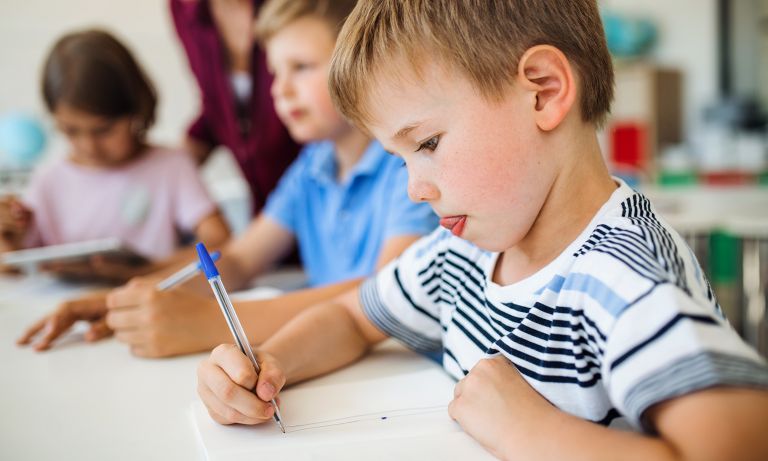
I couldn’t be a Christian parent in 2020 without being a part of the eternal discussion of how to school our children. Many of our believing friends home school or private school, and with COVID, many more are opting out of public education for many valid reasons. As a public school teacher and believer, I thought I had heard all of the sides of the debate in their entirety until recently when a well-known Christian organization published a post in favor of Protestant schools over all others, especially public school. The contents of the post were moralistic in nature, focusing on purely behavioral and marital statistics rather than the gospel, but as I read it, I realized that many in the home school or private school world may not understand WHY my family and many others choose to attend public school.
This post I read asserted that Christian parents put their kids in public school to be missionaries-a choice that often ends up corrupting them morally. Now, there are many reasons we public school, but I can truly say it has very little to do with missions. The following are some of the ACTUAL reasons we have chosen this route:
This is where we are called to be. I have been mentoring and working with kids since I was 17 years-old. I loved college, but when I entered the public school for my student teaching, I knew it was where I was meant to be. I have taught everything from severely emotionally disturbed students to honors level and everything in between and have loved every minute of it. Yes, I have encountered a myriad of challenges along the way, but I have no doubt in my mind that God wants me to serve and be in community with all of the diverse people a public school serves, and we believe he wants our children there as well.
Sin is original. While we teach our children the faith, take them to church, pray with and for them, we know that ” . . .sin came into the world through one man” (Romans 5:12) and ” . . . all have sinned a fall short of the glory of God” (Romans 3:23). I don’t believe our theology is wrong in interpreting this ALL to mean not only those in public school, but in private schools, home school coops and sports teams as well. We do not believe that sending them to public schools is “throwing them to the wolves” as some may say, but empowering them to rely on us, the Lord and their Christian community (some in the public school itself) to help them live wisely in a diverse and challenging world.
Public school offers the most diversity. At first glance, a community can seem fairly homogeneous, but a public school soon reveals how diverse it really is. This experience allows kids to meet people from different races, creeds, family structures, ability levels and orientations more than any other. As a teacher, my exposure to the diversity of the students I teach has enriched my life. I have a greater appreciation for all of God’s creation and the ways he is working in different groups within my community. For my children, the blessing of getting to know others from different backgrounds helps them empathize with and appreciate those who grew up differently than they did, some of whom are fellow believers we would never meet anywhere else. A significant portion of our population are being raised by single, divorced, LGBT parents, grandparents or other family members, foster families, and even group homes. Besides the cultural and socioeconomic diversity represented, much of the special education in our society is only present in public schools. Relationships with these valuable populations is paramount in teaching my children to appreciate all of God’s creation. Our prayer is that getting to know these students from a variety of backgrounds will help them appreciate rather than fear all of God’s creation and truly “bare one another’s burdens” as members of the community as well as the broader Christian community, which is always more diverse than we think. In our church, we pray “your kingdom come” every week. When we get to Heaven, we will be worshiping with a diverse crowd of brothers and sisters from every “tribe and tongue” who have had a myriad of backgrounds. So, why wait until Heaven? Why not start now?
Public school blesses my family. Our city has many wonderful teachers. The teachers my children have had throughout elementary school are skilled, fun, and compassionate. They have truly made learning a blessing. My prayer is that my kids bless them, and the other students as well, by actively learning, helping others and being leaders in their classrooms. When they graduate, my kids will be well-educated and better people because of the influence of the public teachers in their lives.
There is no doubt a doubt in my mind that Christians and many others will be debating the best schooling options until Christ’s return. Our family has many friends who haven’t chosen public schools. As a part of the Christian family, we fully appreciate the many valid reasons people have for choosing different schooling options, but we have no doubt that public school is where we are meant to be.